Vodafone Home Internet – Phase 1
Vodafone wanted an address checker built. I used the research to win the case for rebuilding the whole journey – and drew the roadmap that got us there.
- Role
- Senior UX Designer
- Year
- 2023
- Team
- Product Owner, Content Designer, Technical Architect, Engineers, Scrum Master
- Tools
- Figma, Miro, UserZoom, Google Forms, Askable
In one line
Vodafone had tried for three years to fix its home internet journey and hadn’t. I led the research that finally moved it – and turned a request for one tool into a plan to rebuild the page.
The brief
Vodafone sold NBN, 4G and 5G home internet, but the journey wasn’t turning visitors into customers. The thing they wanted built was the One Service Qualifier – an address search that tells you which of those you can actually get where you live. It had stalled three times over three years. My job was to deliver it. I added a second goal: use the work to make the page convert, not just check addresses – and widen the brief into an end-to-end journey improvement that served the customer and the business at once.
The problem
The tool wasn’t the issue – the journey around it was working against the customer. People landed on a plans page and had to choose between NBN, 4G and 5G before they understood the difference. Pricing led with existing-customer rates, so new customers hit a higher number in the cart and bailed. Plan cards were dense and took several clicks to compare. The data backed it up: the plans page bounced at 40% and a third of carts were abandoned, with cognitive overload and misleading pricing the likeliest causes.
Discovery & research
There was little budget and little appetite for research, so I built the case on a lean mix of methods – enough to be sure, not so much that it stalled again.
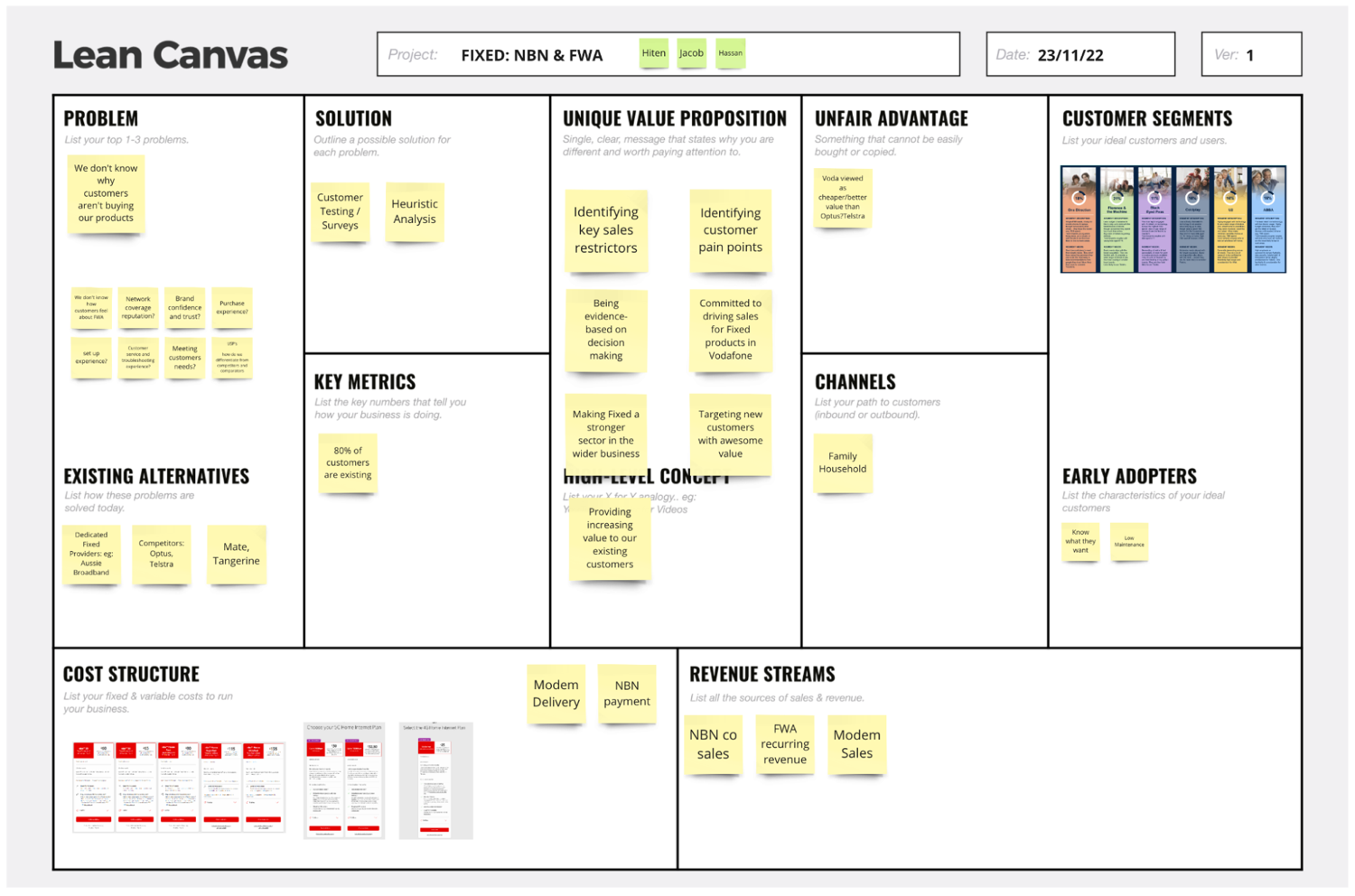
- A lean canvas workshop to get stakeholders agreeing on the problem, the approach and the business upside before any design.
- A pull-together of existing research – service design docs, Deloitte findings, old UX workshops – so we built on prior work instead of repeating it.
- A data dive with sales and analytics that pinned the bounce and abandonment to specific pages.
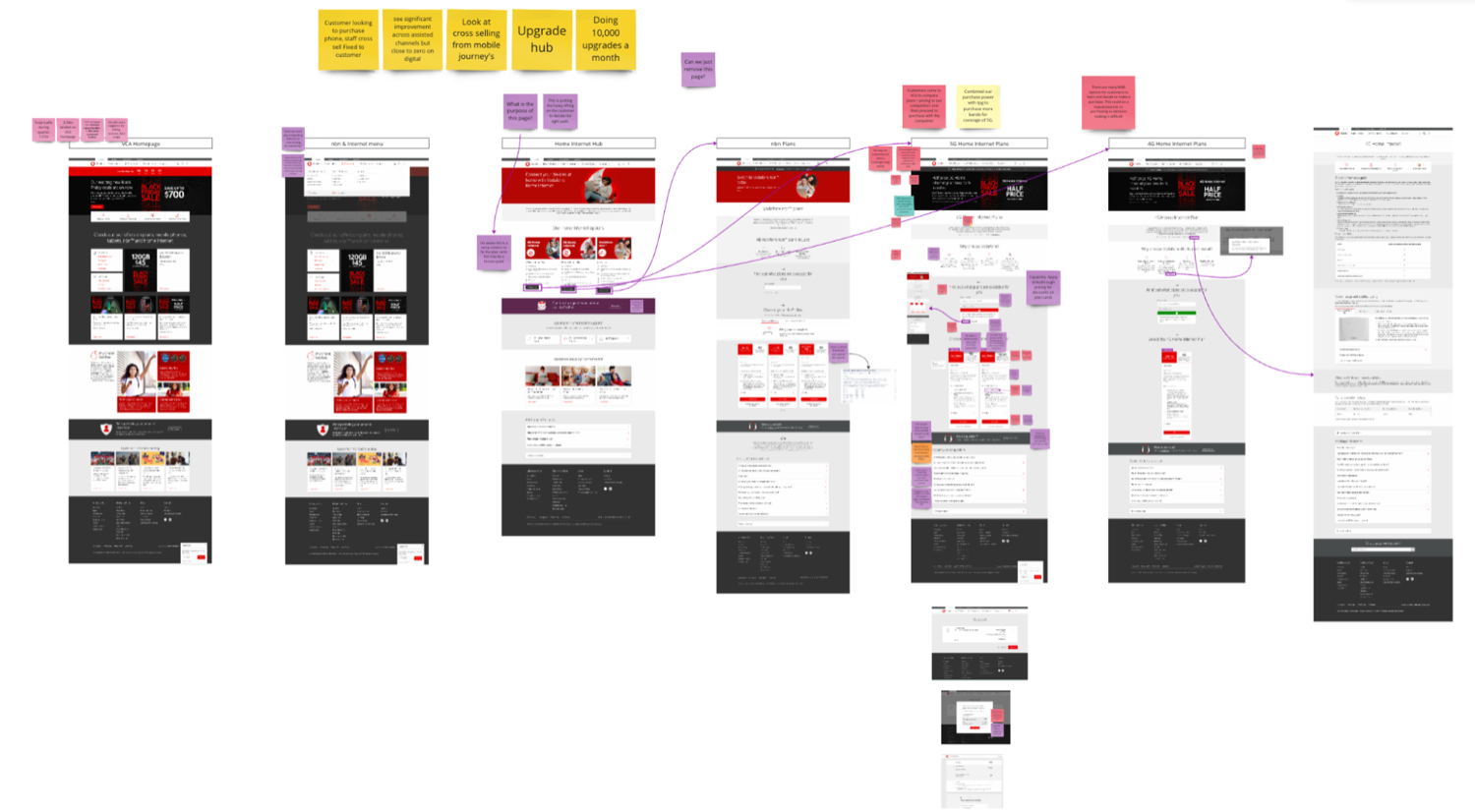
- A heuristic pass across the funnel: confusing entry points, customers forced to pick a technology before they understood it, overloaded plan cards, and the pricing bait-and-switch.
- A competitive teardown of Telstra, Optus, Aussie Broadband, Superloop and others, to see the patterns people already expected.
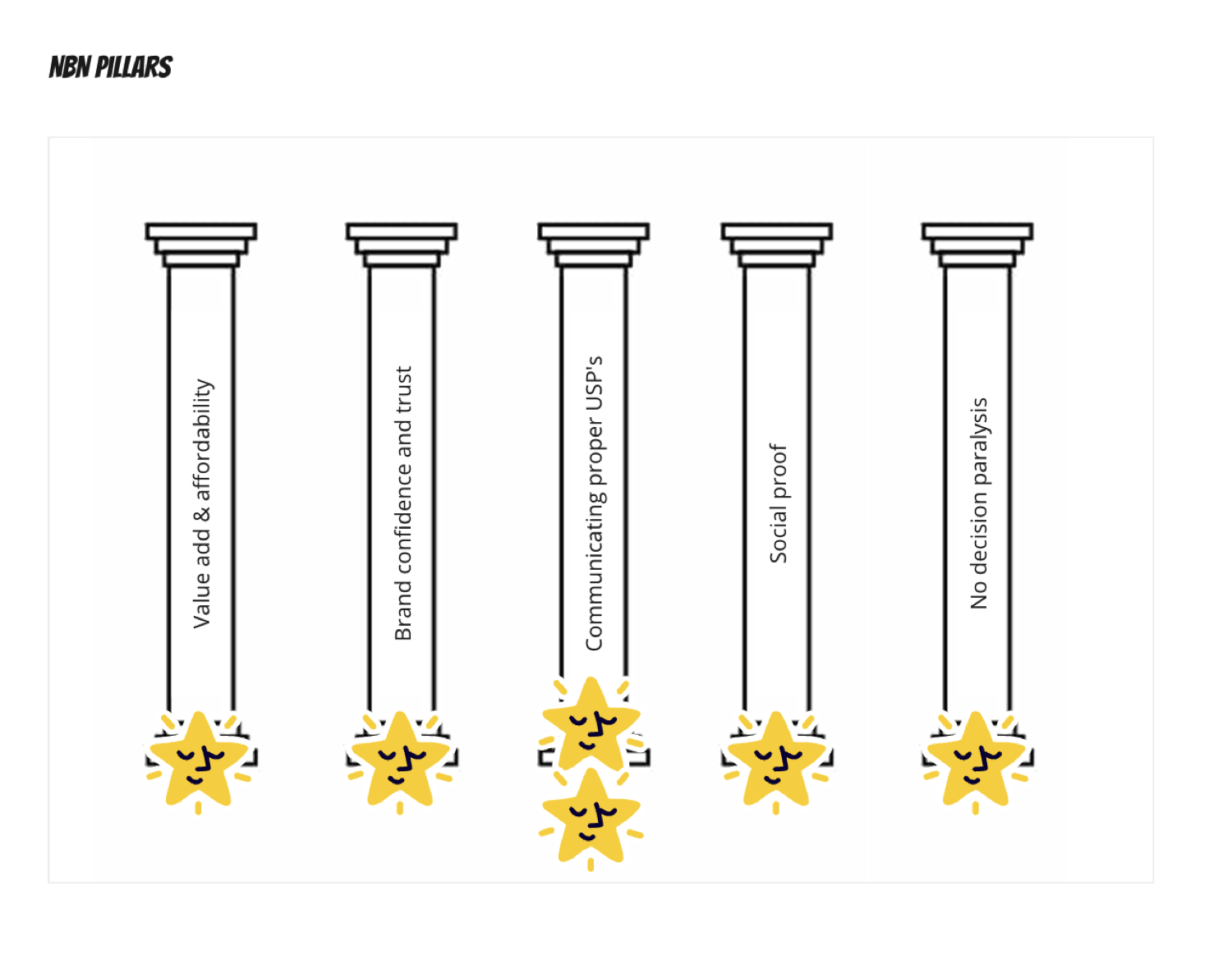
To validate it without a research budget, I ran a 50-person survey – small, but enough to point clearly in one direction. It said something simple and useful: people don’t shop for the cheapest provider, they shop for the one they trust to be reliable, and they want to know exactly what they’re paying for. Three priorities kept coming up – trust in the provider, reliability over price, and clear value for money – and I turned those into the project’s pillars: the test every later decision had to pass.
Getting everyone aligned
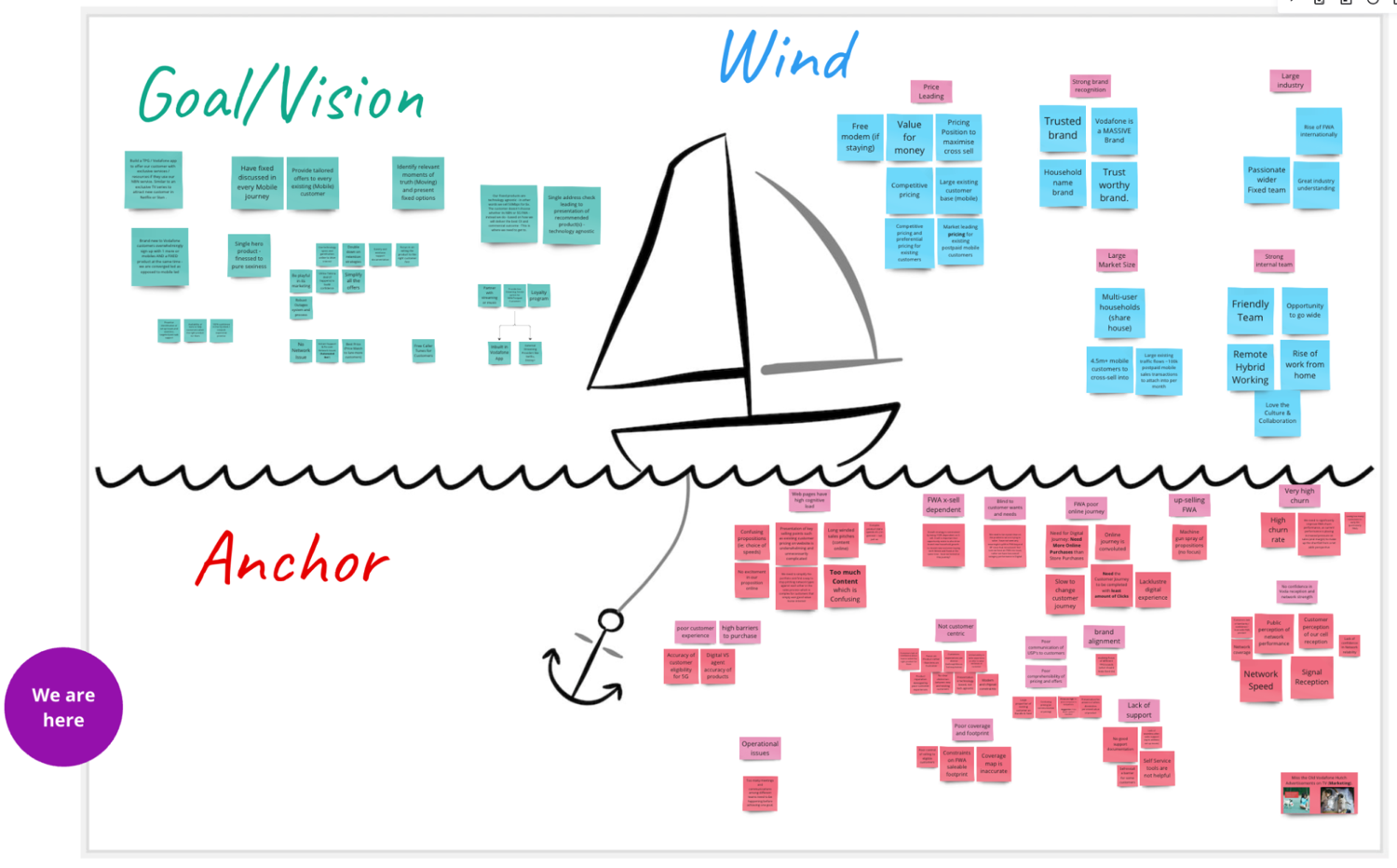
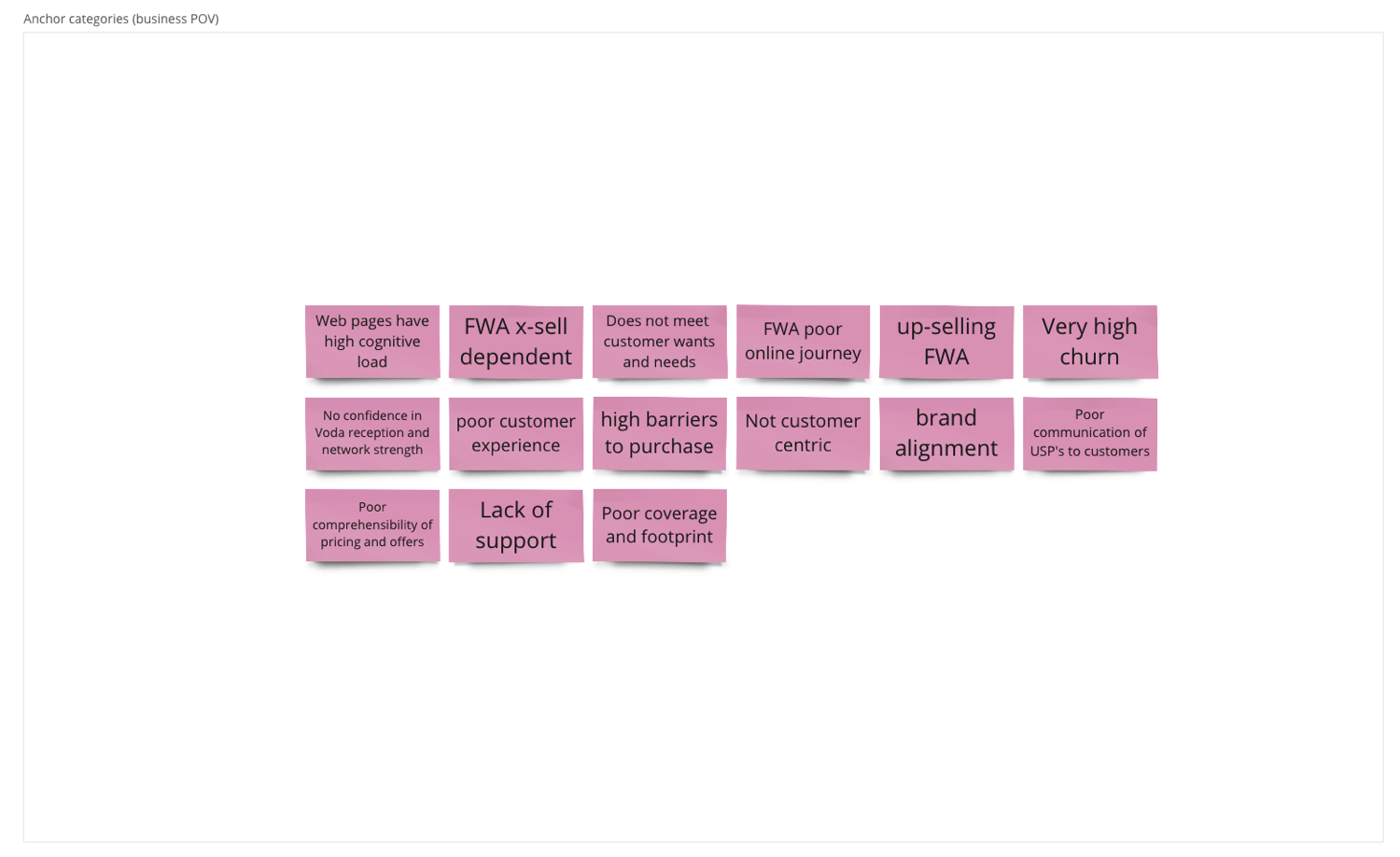
A plan only matters if the people who fund it believe in it. I ran a sailboat workshop with stakeholders and product managers to surface what was pushing the journey forward, what was anchoring it, and where it needed to go. That’s where the business pain points came into the open – and where the executive buy-in came from.
From insight to roadmap
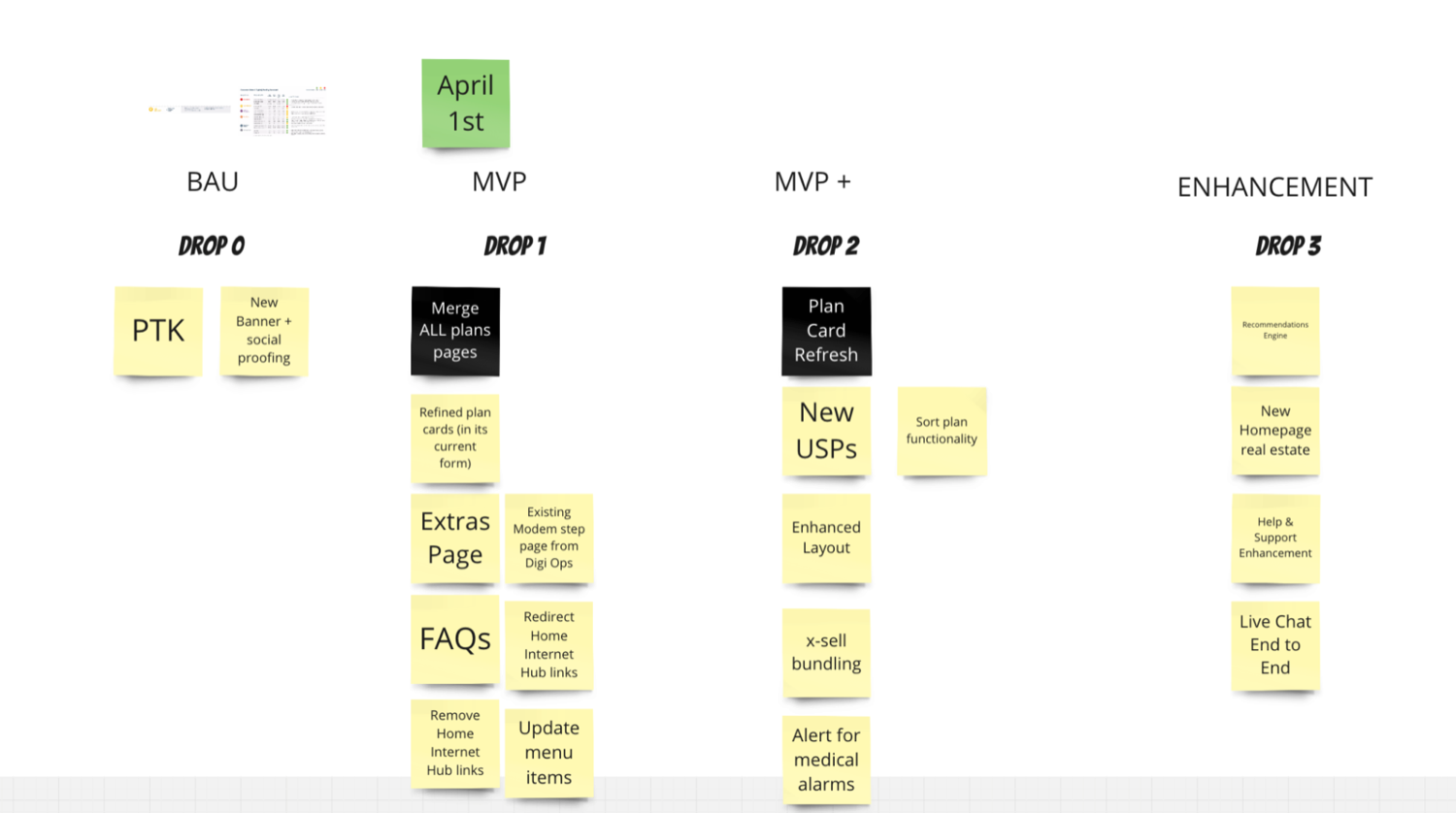
I translated the insights into clear opportunity areas – reduce friction at qualification, simplify plan comparison, make pricing transparent up front, fix the content hierarchy, lower the reading level – and shaped them into a phased roadmap that mixed quick wins with the real rebuild:
- Drop 0 – quick win. A homepage banner leading with Vodafone’s home-internet awards: social proof for the people chasing the “best” provider, A/B tested for impact on conversion.
- Drop 1 – the MVP. One unified product page that folds 4G, 5G and NBN together, with address qualification moved up front so people pre-qualify before they have to choose.
- Drop 2 – plan cards. Redesigned cards with clearer new-vs-existing pricing and the key info – speed, value, features – up top.
- Drop 3 – the vision. A recommendation wizard based on address and household size, plus explainer modals for the technology differences.
Quick wins first, so the bigger changes had trust – and evidence – behind them.
The result
The research gave the project what three years of attempts hadn’t: evidence everyone agreed on, and a roadmap with executive backing. It re-established a research-led, customer-centred way of working on the journey, and set up measurable gains in conversion, bounce and digital mix. The trust-and-clarity insight and the unified-page roadmap are exactly what Phase 2 was built on – and Phase 2 is where it paid off, with conversion up 166%.
What I took from it
A small, cheap survey can unlock a project that money and politics had stalled for years – if you use it to build agreement, not just data. The win here wasn’t a screen. It was getting product, sales, tech and the executives looking at the same problem the same way, with a plan they’d actually back.