+166% conversion
Vodafone Home Internet – Phase 2
Asked to add an address checker – I turned it into the page that sells. +166% conversion.
- Role
- UX Designer
- Year
- 2024
- Team
- Product Owner, Content Designer, Technical Architect, Engineers, Scrum Master
- Tools
- Figma, Miro, UserZoom
In one line
Vodafone asked me to add an address checker. I turned it into the page that sells their home internet – conversion went up 166%.
The brief
Vodafone’s home internet lived across separate pages for NBN, 4G and 5G. To buy, a customer first had to work out which of those they could even get at their address – across pages that each pitched a different product, with high cognitive load, bloated copy, and the key decision buried below the fold. Most never made it that far. My job, as briefed, was small: add an address bar that tells people what they qualify for.
What I did instead
The address check was the moment a customer decided whether to bother. So rather than bolt a tool onto a broken journey, I rebuilt the journey around it – folding NBN, 4G and 5G into one qualification page where people could check, compare and buy in the same place.
I had three months, and one rule from the research: customers care about three things – value for money, reliability, and speed. Anything on the page that didn’t serve one of those came off.
How it came together:
- Started with a customer survey, a competitive teardown and a heuristic pass to find where people were dropping out and what good looked like elsewhere.
- Ran a cheap CRO experiment first (“Drop 0”) – sharper copy and social proof, A/B tested – to learn before committing to a full rebuild.
- Facilitated a cross-functional workshop with product, content, tech and UI leadership to gather requirements early, surface roadblocks, and sketch the unified page together – so it was feasible and bought-in from the start, not handed over at the end.
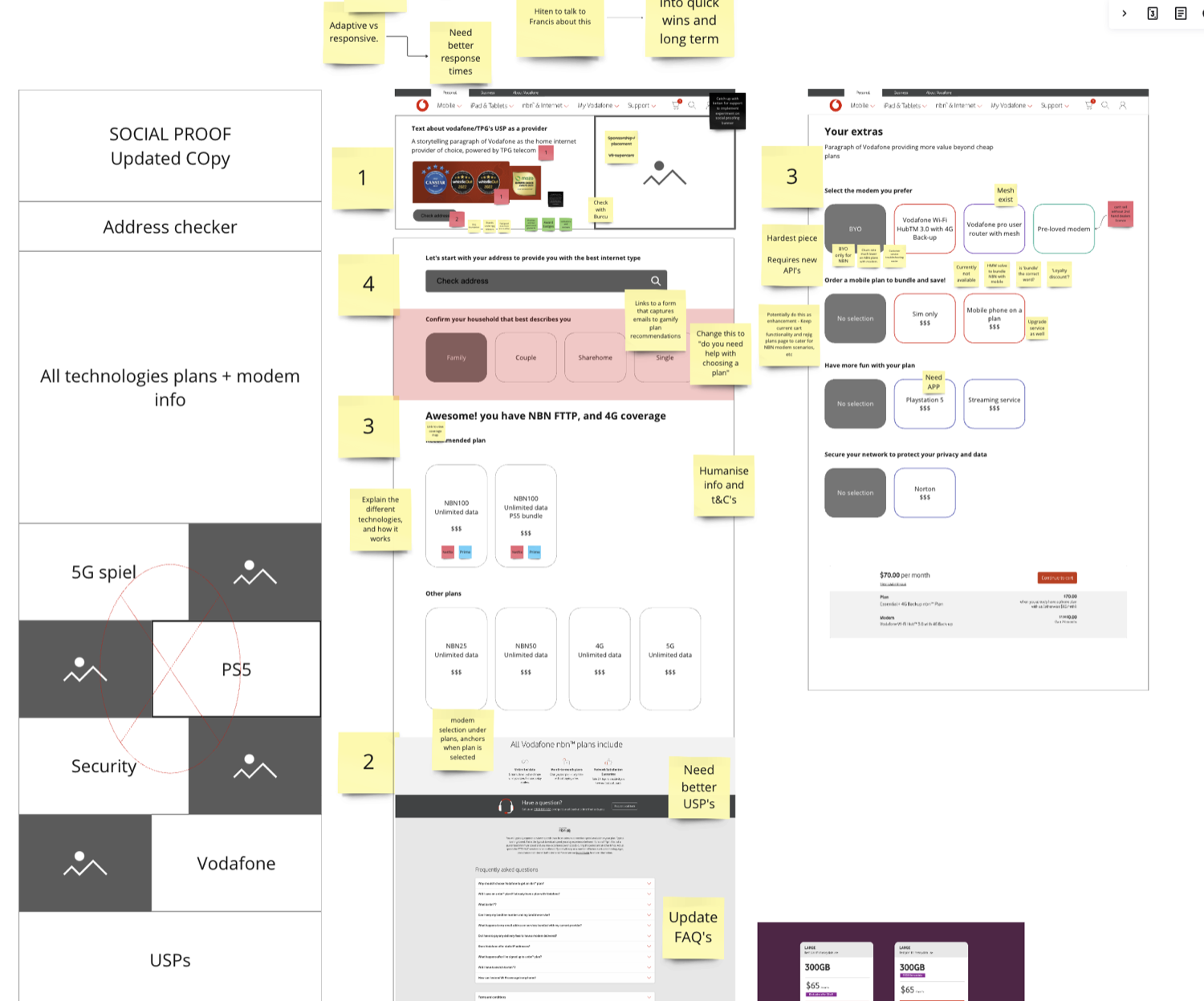
A handful of decisions did most of the work:
- Cut the cognitive load – stripped the filler text that buried the decision.
- Lifted the decision points – address bar and plan cards to the top of the page.
- Untangled pricing – personalised for existing customers, so the cart stopped surprising people.
- Shortened the path – fewer steps between landing and qualifying.
- Built accessibility in properly – lower reading level, ARIA tags, and alternate ways to control the page.
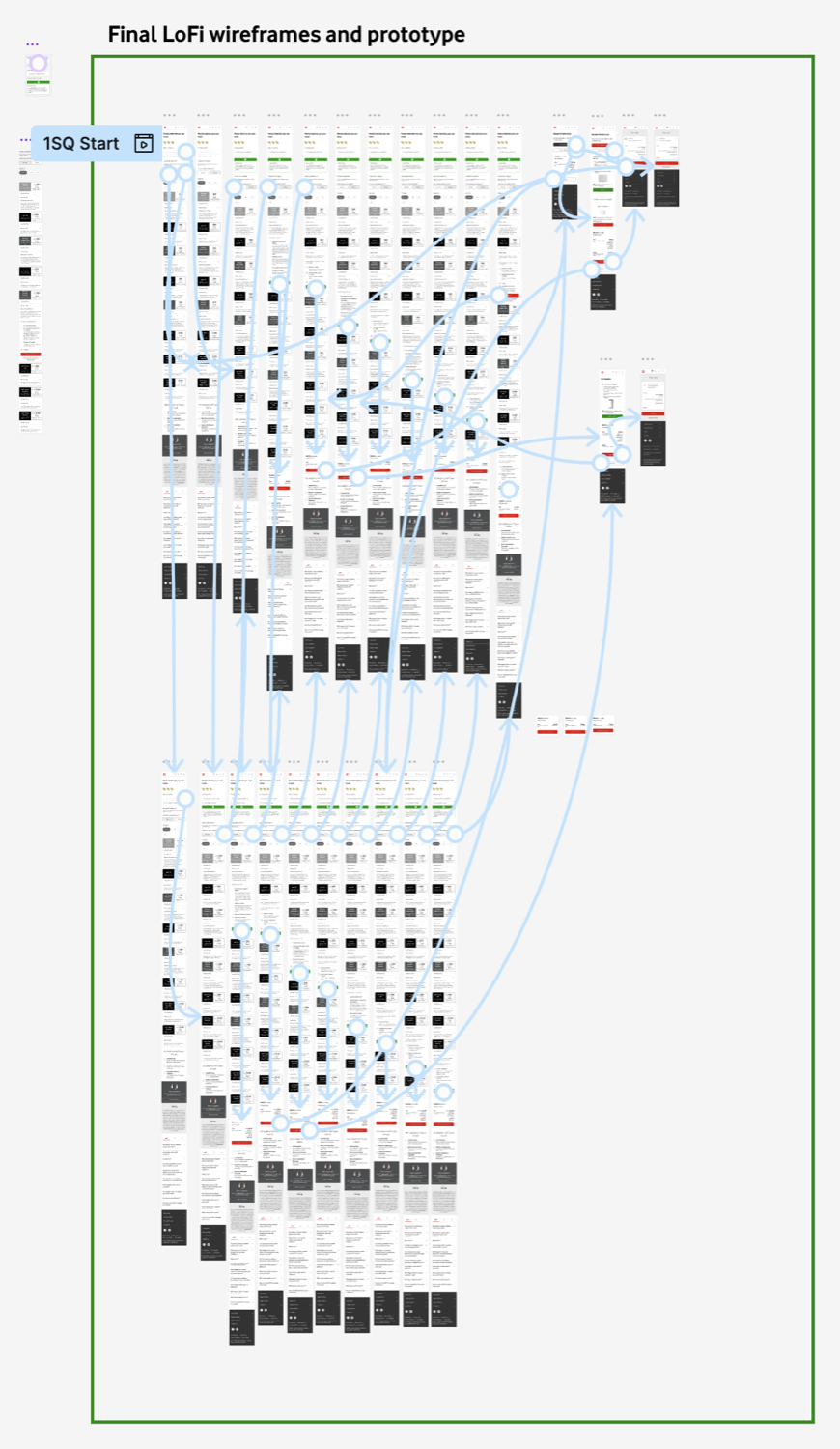
I designed mobile-first in Figma and built a working prototype, checking with the tech team as I went so it could ship across platforms without a heavy rebuild.
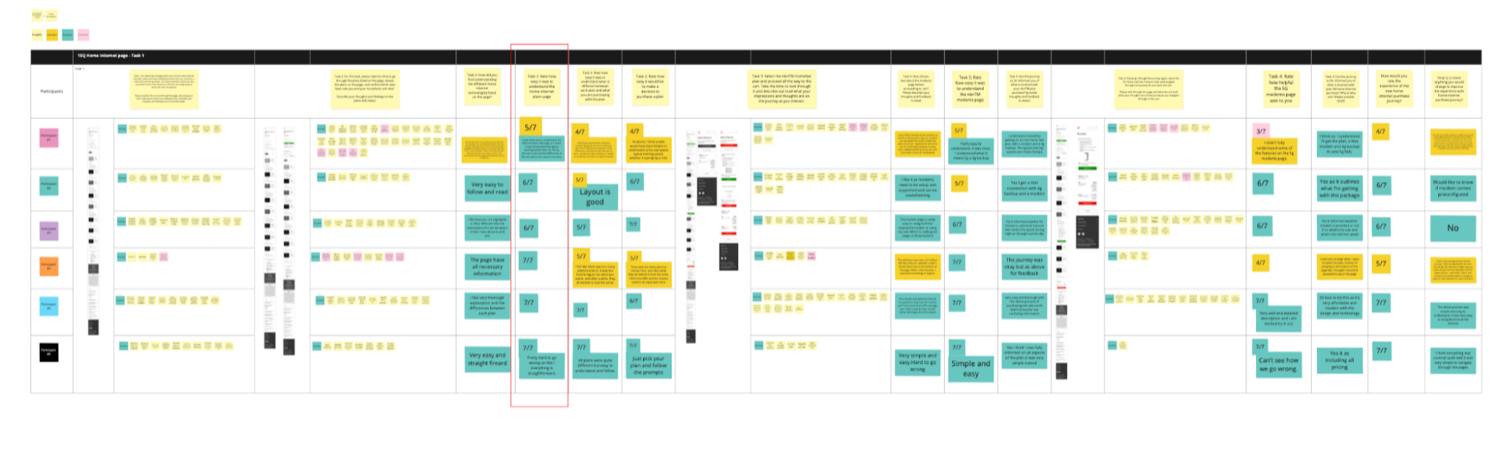
I tested it unmoderated on UserZoom – could people find plans, read them, choose, and understand what they were getting? Users came out better able to assess plans, qualify their address and pick an option; the concerns that showed up went straight back into the design.
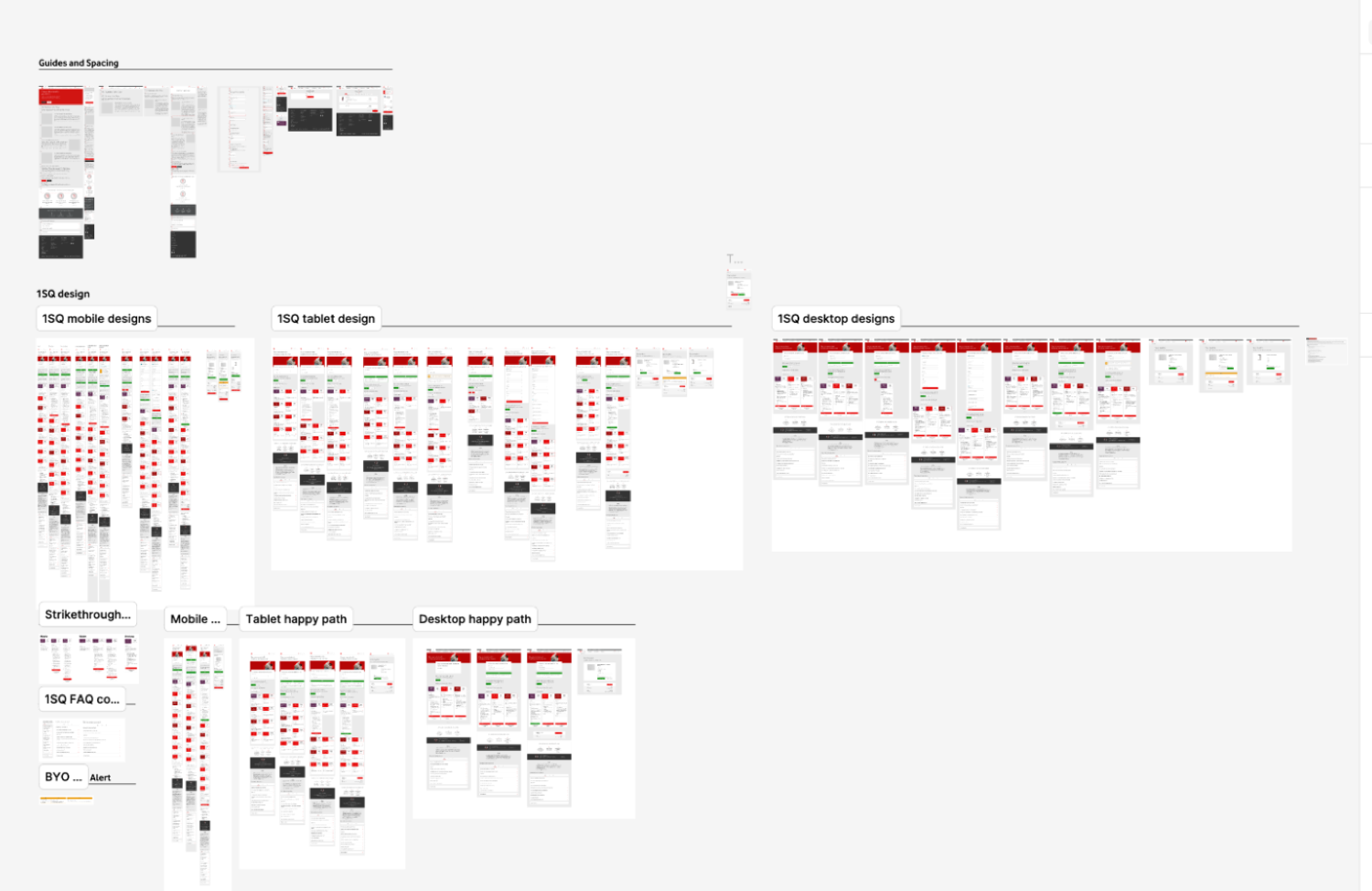
The final designs were built for mobile, tablet and desktop and signed off across product, content, UX and UI. I stayed on through build – reviewing progress, unblocking engineers, and checking the live thing matched the intent.
The result
The single unified page beat the old separate pages on every metric that mattered:
- +166% conversion – 1.15% vs 0.43%
- +32% order-to-visit rate – 1.32% vs 1%
- +27% address-check engagement – 55.9% vs 44%
Across all home internet, conversion rose 11% (0.82% → 0.92%), with a 14.74% lift in visit-to-conversion and a 3.11% gain in qualification – tracked from launch by the CRO and sales teams.
What I took from it
The biggest gains came from taking things away, not adding them. Three pages became one, and anything that didn’t help the customer decide came off the page. Subtraction did more than any feature could have.